
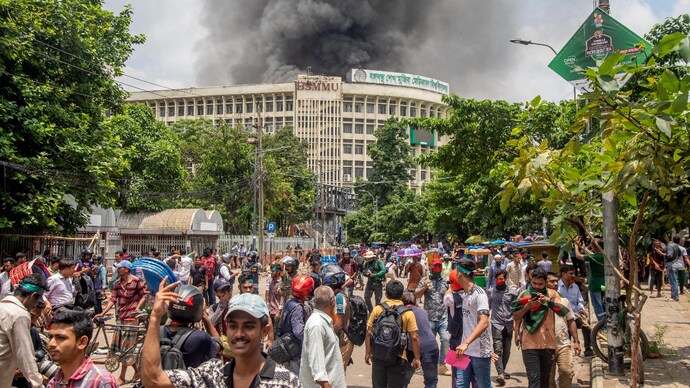
The United States' call for accountability from the Muhammad Yunus-led interim government in Bangladesh underscores the global stakes tied to the nation's ongoing political and security crises. With allegations of targeted violence against religious and ethnic minorities, particularly Hindus, it is crucial for the U.S. and other international actors to address these violations while supporting Bangladesh's efforts toward stability and governance.
A Fragile Security Environment
Following the ouster of Sheikh Hasina, Bangladesh has entered a period of significant upheaval. Political transitions in volatile environments often give rise to increased insecurity, and in Bangladesh, this has reportedly manifested as violence targeting minorities. The protection of these communities is not only a moral imperative but also a barometer for the country’s broader stability and adherence to democratic principles.
John Kirby’s statement at the White House affirms that the Biden administration is monitoring the situation closely. While the U.S. has emphasized its commitment to supporting Bangladesh's law enforcement capabilities, this must be coupled with stringent measures to ensure these forces act impartially and uphold human rights.
International Community’s Role
The involvement of Indian-American groups and Congressman Raja Krishnamoorthi in bringing attention to the plight of Hindus in Bangladesh highlights the role of diaspora communities in shaping international policy. Peaceful protests and advocacy efforts have amplified the urgency of the situation, urging both the outgoing Biden administration and the incoming Trump administration to take concrete action.
The U.S. has tools at its disposal, including diplomatic pressure, conditional aid, and collaboration with international organizations, to hold the Bangladeshi interim government accountable. However, this accountability must be balanced with diplomatic engagement that encourages the Yunus-led administration to undertake reforms, foster reconciliation, and protect vulnerable populations.
Challenges Ahead
Despite international efforts, the situation in Bangladesh remains fraught with challenges:
- Political Polarization: The political vacuum created by Sheikh Hasina's departure has intensified tensions, making it difficult to establish a government that is both legitimate and inclusive.
- Law Enforcement Bias: Allegations of security forces turning a blind eye to, or participating in, violence against minorities must be addressed to rebuild trust in state institutions.
- Regional Implications: Bangladesh’s instability could have ripple effects across South Asia, particularly if minority persecution leads to cross-border migration or escalates tensions with neighboring India.
Path Forward: Accountability and Support
For the U.S. and the global community to effectively support Bangladesh, a multi-pronged approach is necessary:
Immediate Protection for Minorities: The interim government must be urged to deploy adequate security forces to regions like Chittagong and Rangpur, where violence has been reported. International observers could play a role in monitoring these efforts.
Support for Reconciliation Efforts: Diplomatic channels should be leveraged to encourage dialogue between the interim government and minority representatives, fostering a roadmap for coexistence and trust.
Conditional Aid and Sanctions: Aid should be tied to measurable progress in human rights and governance, while targeted sanctions could be imposed on individuals or groups found complicit in violence.
Collaboration with Civil Society: International organizations and local NGOs can play a crucial role in documenting abuses, supporting victims, and advocating for systemic reforms.
Conclusion: A Test of Leadership and Commitment
The unfolding crisis in Bangladesh is a critical test for the Yunus-led interim government and the broader international community. Ensuring security and justice for all citizens, regardless of religion or ethnicity, is not just a responsibility but a necessity for the country’s path forward. For the U.S., balancing diplomatic engagement with firm accountability measures will be key to supporting a peaceful and inclusive transition in Bangladesh.
Source: Link