
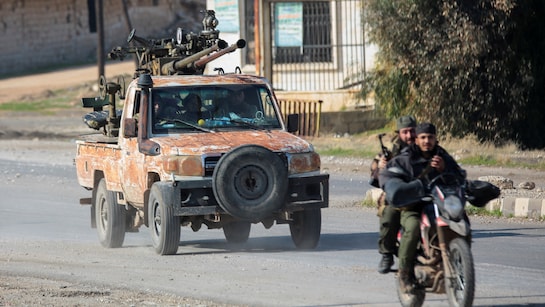
The loss of Daraa, Aleppo, and Hama in quick succession is a devastating blow to the Assad regime, reshaping the battlefield dynamics of Syria’s protracted civil war. The events underscore both the resilience of opposition forces and the fragility of the Syrian government’s hold on key regions. As rebel groups, including the controversial Hayat Tahrir al-Sham (HTS), gain momentum, the broader implications for Syria’s future, regional stability, and international intervention are profound.
The Symbolism of Daraa
Daraa’s fall is particularly symbolic. Known as "the cradle of the revolution," it was here in 2011 that the seeds of Syria’s uprising were sown when the government’s brutal crackdown on protests sparked nationwide unrest. Its recapture by local armed groups not only signals the failure of Assad’s military strategy but also rekindles the revolutionary fervor that defined the war’s early days.
This shift challenges the narrative of Assad’s regained control following significant Russian and Iranian support in recent years. The rapid territorial losses expose vulnerabilities in the regime's overstretched forces and their inability to sustain a coordinated defense across multiple fronts.
The Role of HTS and Rebel Dynamics
HTS’s prominence in the offensive complicates the picture. Rooted in Al-Qaeda, HTS remains a divisive force within Syria’s opposition, viewed with suspicion by Western governments and some Syrians alike. However, its territorial gains—sevenfold since November 27—demonstrate its military effectiveness.
HTS leader Abu Mohammed al-Jolani’s statement that “the goal of the revolution remains the overthrow of this regime” emphasizes the group’s intent to position itself as the vanguard of Syria’s opposition. Yet, this ambition raises concerns about the potential for extremist governance, echoing fears that plagued earlier phases of the war.
The Human Cost
The toll of this renewed violence is staggering. Over 800 lives lost in a week and 280,000 displaced highlight the unrelenting human suffering. Civilians in Homs, particularly those from Assad’s Alawite minority, are fleeing in droves, fearing retaliatory violence. Meanwhile, airstrikes and artillery fire continue to devastate communities.
The stories of individuals like Yazan, a former activist in exile, and Haidar, a fearful resident of Homs, encapsulate the deeply personal stakes of this conflict. For many Syrians, the battle is not just about territorial control but about survival, justice, and the hope of liberation—whatever its form.
International Implications
The rapid collapse of Assad’s control over key cities poses a strategic dilemma for his allies and adversaries alike.
Russia and Iran: Assad’s primary backers must recalibrate their strategies to prevent further losses. Russia’s air support remains critical, but questions arise about its long-term commitment amid mounting casualties and shifting priorities.
Turkey: As a supporter of the opposition, Turkey faces its own challenges, balancing its interests in Syria with the risks posed by HTS’s ascendancy and the Kurdish-led Syrian Democratic Forces' movements.
The West: Western governments, while largely sidelined in Syria’s recent trajectory, must grapple with the implications of HTS’s growing influence. Supporting Syria’s opposition becomes increasingly complex when extremist groups dominate the landscape.
What’s Next for Assad?
The loss of Daraa and other cities doesn’t spell immediate defeat for Assad, but it marks a decisive turning point. As analyst Aron Lund notes, losing Homs would sever critical supply routes and undermine the regime’s ability to function as a credible state entity. Assad’s survival now hinges on retaining control of Damascus and coastal strongholds, where his Alawite base remains concentrated.
A Fragile Future
Syria’s civil war has seen countless ebbs and flows, but this latest development underscores the ongoing volatility. The dream of liberation remains alive for many Syrians, yet it is tainted by the specter of extremist rule and continued suffering.
The international community must act decisively—not only to mediate an end to the conflict but to ensure that Syria’s future reflects the aspirations of its people, rather than the dominance of warlords and foreign powers. The fall of Daraa serves as both a warning and a call to action for those invested in Syria’s long-term stability
Source: