
 "From Refugees to Rebels: India’s Strategy for Myanmar’s Evolving Crisis")
The output is:The evolving chaos in Myanmar presents both an immediate threat and a long-term strategic challenge for India. As China recalibrates its stance in the region, India’s historically cautious approach must now evolve into a proactive strategy to safeguard its northeastern borders and broader geopolitical interests.
Understanding China’s Role in Myanmar
China’s shifting alliances—supporting Ethnic Armed Organisations (EAOs) and later pivoting towards the junta—demonstrate its pragmatic, often transactional, diplomacy. Initially leveraging the Three Brotherhood Alliance to counterbalance Western-backed National Unity Government (NUG), China later distanced itself from these groups as their actions began threatening Chinese interests, including attacks on its infrastructure and citizens.
China’s push for a Joint Venture Security Company (JVSC) with the junta highlights its intent to formalise control over security operations in Myanmar, a move likely aimed at protecting its Belt and Road Initiative (BRI) investments. For India, this signifies not just economic implications but also security concerns, particularly given the porous border and transnational ethnic ties in the region.
Implications for India
Border Security and Refugee Crisis
India shares a 1,643 km border with Myanmar, a region plagued by displacement and cross-border trafficking. The Sagaing region alone has over 2.5 million internally displaced people, many seeking refuge in India. Without robust border management, this humanitarian crisis could exacerbate unrest in India’s northeastern states.Northeast Unrest and EAO Influence
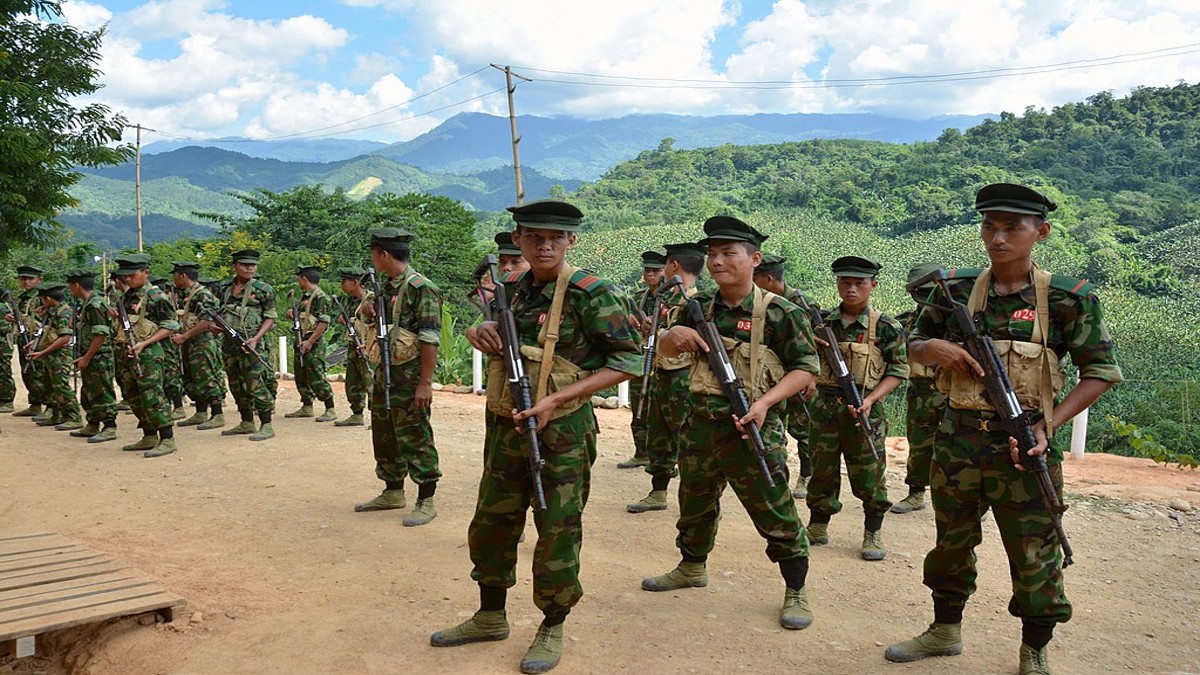
The increasing militarisation of EAOs, coupled with their territorial control, threatens to spill instability into India’s northeastern states. Groups like the Arakan Army (AA) and their links to local insurgents raise alarms, as does the potential for arms and drug trafficking across the border.China’s Strategic Depth in Myanmar
Beijing’s growing acceptance of General Min Aung Hlaing’s regime underscores its long-term goal of securing influence in Myanmar, especially in Rakhine and Shan states. For India, this challenges its Act East policy and connectivity projects, such as the Kaladan Multi-Modal Transit Transport Project.
Strategic Recommendations for India
Balancing Junta Relations and EAO Engagement
India must simultaneously strengthen ties with the Myanmar junta and engage with EAOs. Military-to-military diplomacy can foster trust with the junta, while people-to-people diplomacy, including scholar and veteran interactions, can build rapport with EAOs.Enhanced Border Management
Investments in border infrastructure, surveillance, and cross-border trade facilitation will help mitigate illegal activities while fostering stability. Collaborative efforts with Myanmar to counter drug trafficking and arms smuggling are crucial.Humanitarian and Development Aid
Offering humanitarian aid to displaced populations and investing in development projects in Myanmar’s conflict-ridden regions will strengthen India’s soft power and reduce reliance on China.Regional Alliances and Multilateral Forums
India must leverage forums like BIMSTEC and ASEAN to address Myanmar’s crisis as a regional issue, fostering collective solutions while countering China’s dominance.
Conclusion
Myanmar’s volatile dynamics demand India’s active participation in shaping the region’s future. Waiting for the dust to settle is no longer an option, as the stakes—security, economic, and strategic—are too high. A nuanced, multifaceted approach will ensure that India safeguards its northeastern borders, counters China’s growing influence, and asserts its role as a stabilising force in Southeast Asia.
Source:
Ramification | China’s changing colours in Myanmar should ring bells in Delhi