
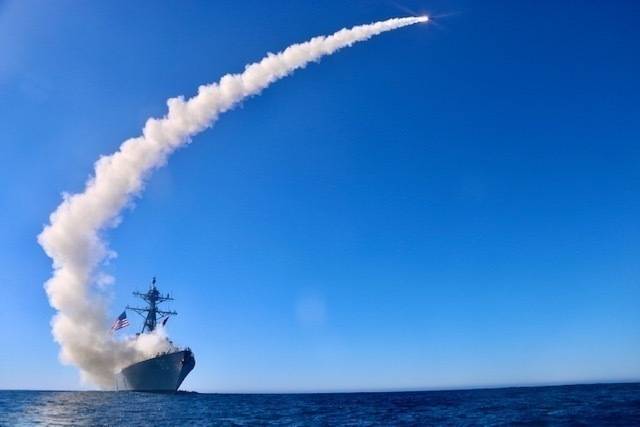
The recent congressional wargame highlighting the United States' inability to sustain a prolonged conflict with China reveals deep vulnerabilities in its defense industrial base. This stark warning serves as a call to action for policymakers, defense contractors, and international allies to address critical gaps in military readiness and supply chain resilience. The stakes are high, as the consequences of inaction could jeopardize not only the U.S. position in global geopolitics but also the stability of the Indo-Pacific region.
Why This Matters
The simulation underscores a harsh reality: the U.S. military would exhaust its missile stockpile within days in a potential conflict with China. This scenario becomes even more alarming considering China’s growing assertiveness in the Taiwan Strait and its broader Indo-Pacific ambitions. For decades, the United States has relied on its military supremacy to uphold international norms and deter aggression. Losing this edge would embolden adversaries, weaken alliances, and destabilize regions vital to global trade and security.
Moreover, the reliance of U.S. defense manufacturers on Chinese-sourced minerals and components is a glaring vulnerability. These dependencies could easily be weaponized by Beijing in times of conflict, crippling production and weakening military readiness.
Lessons from Ukraine Aid and Industrial Shortcomings
The U.S. has transferred significant quantities of arms to Ukraine to aid its fight against Russian aggression. While this support is strategically important, it has depleted U.S. stockpiles of tactical weapons. This depletion raises a fundamental question: How can the United States simultaneously deter peer competitors like China and support its allies without sufficient industrial capacity to replenish its arsenals?
This challenge is exacerbated by the lack of rapid innovation in U.S. defense manufacturing. Unlike China, which has centralized control over its defense industry, the United States operates a complex network of private contractors. While this model has its advantages, it is often plagued by inefficiencies, bureaucratic delays, and cost overruns.
The Path Forward: Solutions and Recommendations
Revitalize the Defense Industrial Base:
The U.S. must prioritize investments in its defense manufacturing capabilities. This includes expanding production lines, incentivizing innovation, and modernizing outdated infrastructure. Public-private partnerships could accelerate the development of next-generation technologies, such as hypersonic missiles and unmanned systems.Diversify Supply Chains:
Reducing dependency on Chinese minerals and components is imperative. The U.S. should collaborate with allies to develop alternative sources of rare earth materials and establish domestic processing facilities. Countries like Australia and Canada, rich in mineral resources, could be key partners in this effort.Strengthen Stockpiles and Procurement:
To prevent stockpile depletion, the U.S. should adopt a proactive approach to procurement. This includes maintaining higher baseline inventories of critical munitions and establishing contingency contracts to ramp up production during crises.Leverage Allied Cooperation:
The United States should deepen defense collaborations with allies in the Indo-Pacific, such as Japan, South Korea, and Australia. Joint production agreements, shared logistics hubs, and coordinated military planning can enhance collective capabilities and reduce individual burdens.Invest in Emerging Technologies:
China’s focus on cyber, space, and artificial intelligence-driven warfare highlights the need for the U.S. to stay ahead in these domains. Accelerating R&D in these areas will provide asymmetric advantages and reduce reliance on traditional stockpiles.
A Strategic Imperative
The warning from Congress is not just about missiles—it is about readiness, resilience, and the ability to deter aggression in a rapidly changing world. A failure to act decisively risks ceding strategic advantage to China, with far-reaching consequences for global stability.
The United States has faced similar wake-up calls before, such as during the Cold War, and emerged stronger through innovation and determination. Today, the challenge is no less urgent. By addressing these vulnerabilities now, the U.S. can reaffirm its commitment to safeguarding peace and democracy in the Indo-Pacific and beyond.
Source: